Let's Dive In
Big Brother is vibing, no worries.
İ. Hüseyin Özdamar · April 24, 2026
On the surface, the platform looks like a menu system. But the surface isn't where it actually works.
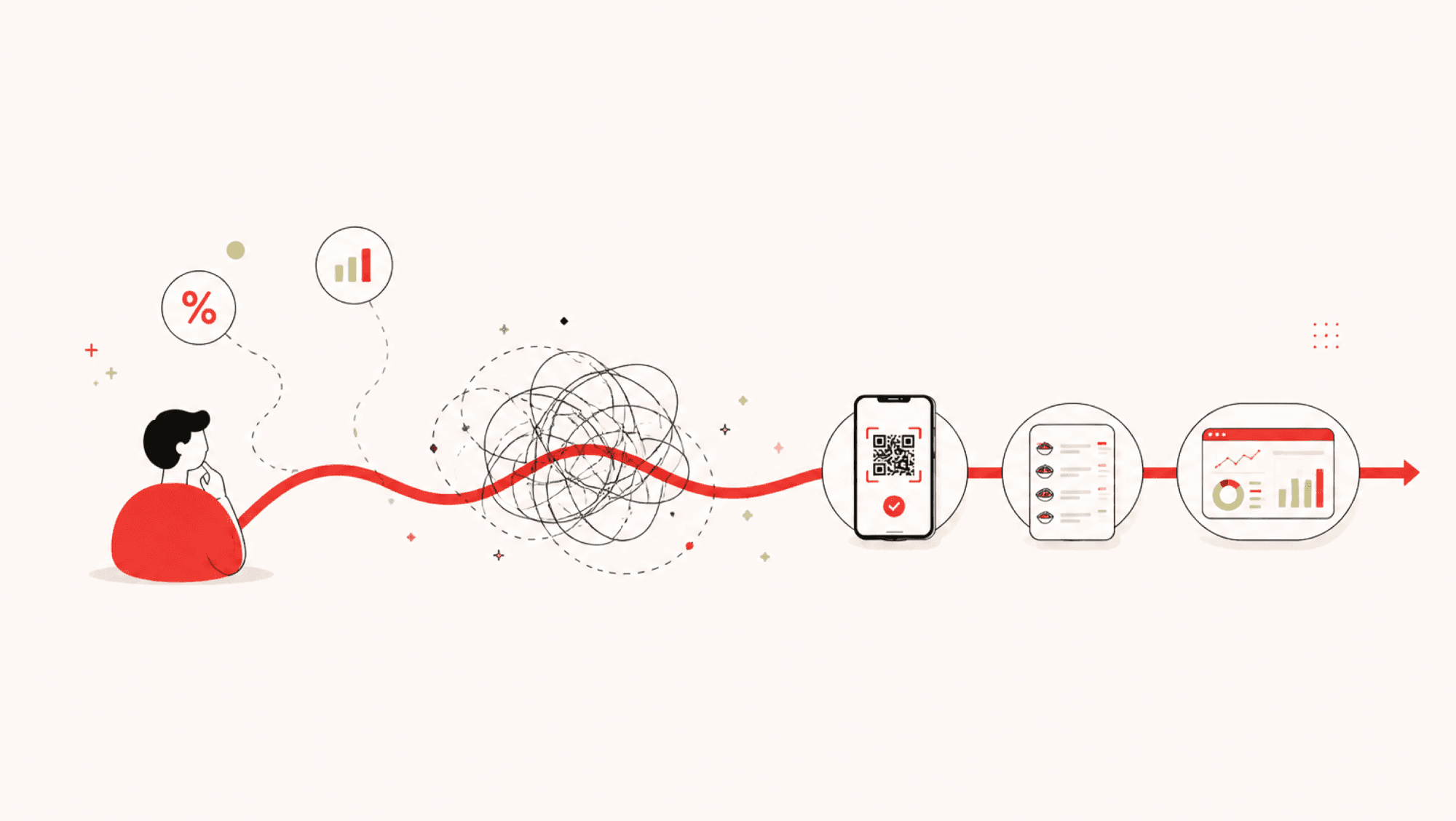
A user walks into a venue, scans the QR code, and enters the menu. What happens after that point isn't just product selection. The user moves through the menu, pausing on some items, scrolling past others, coming back to a few. The decision-making process isn't linear. It's scattered. The system captures that scattered flow.
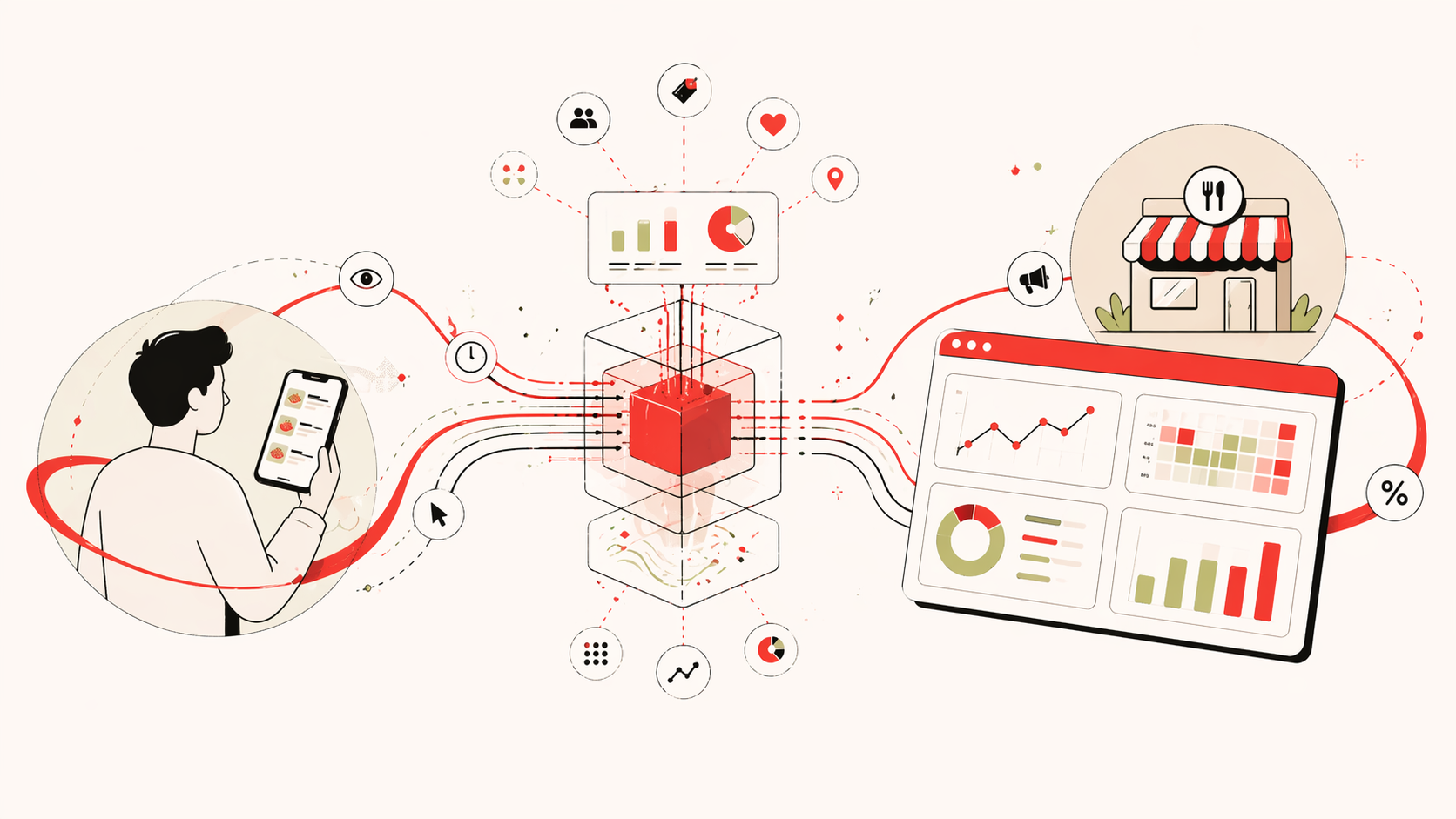
What gets collected isn't the choice. It's the behavior. What was looked at, what was skipped, where attention stopped, what came back around. This data isn't held against user identity, it's held against behavioral patterns. The goal isn't to understand a single user. It's to understand the movements that keep repeating.
On the business side, the system opens a different door. The menu is no longer just a product list. Content can be structured, campaigns can be defined, and the performance of all of it can be directly observed. For the first time, a business can clearly see which products draw attention, which ones get seen but not chosen, which areas go unnoticed, and where users tend to get lost inside the menu.
Every update made without this data is a guess. Every change made with it becomes measurable.
The system builds a bridge here. It collects behavior from the user side, processes it, and hands it back to the business. But this isn't a one-way flow, it gets fed again with every interaction. Over time, recurring behaviors accumulate. User groups take shape. It becomes visible that certain products perform better under certain conditions. It becomes clear which campaign types work for which kinds of users.
At this point, the system isn't just reading the past. It starts to interpret.
A simple example is enough. A user enters the menu, looks at a few items, checks the prices, and makes a decision at a certain point. On its own, that's just a data point. But when the same behavior repeats across different users, a pattern forms. The system catches that pattern and makes it visible. What should change, what should stay, what should be pushed forward, these things become clear.
That's why what we're building isn't an interface. It's a layer of measurement and meaning. It doesn't change the menu. It makes visible what's behind it. That's where the real difference is made.