After QR
So what happens after the scan?
İ. Hüseyin Özdamar · April 25, 2026
QR menus started from the right place. They enabled contactless access, simplified operations, and reduced costs. But for many businesses, the process stopped there. The paper menu moved to a screen, but the experience stayed the same. This is not a transformation, just a format change.
Today, most QR menus still operate like static lists. Users look, choose, and leave. Layers such as search, guidance, and personalization are mostly absent. As a result, the experience remains shallow.
The experience is also fragmented. Since each business builds its own solution, users encounter a different flow in every venue. They have to relearn the system each time. More importantly, nothing accumulates. Preferences, habits, and past interactions are not carried over. Every visit starts from zero.
On the business side, QR exists but meaningful data does not. What users look at, where they pause, what they prefer is unclear. Despite this, menus are updated and campaigns are created. But these decisions are not based on measurable insights.
This is why campaigns and loyalty remain superficial. Campaigns are typically static and open to everyone. Loyalty systems are disconnected and difficult to track. They fail to create real value for the user.
Up to this point, this is what is missing.
But this is also where "after QR" begins.
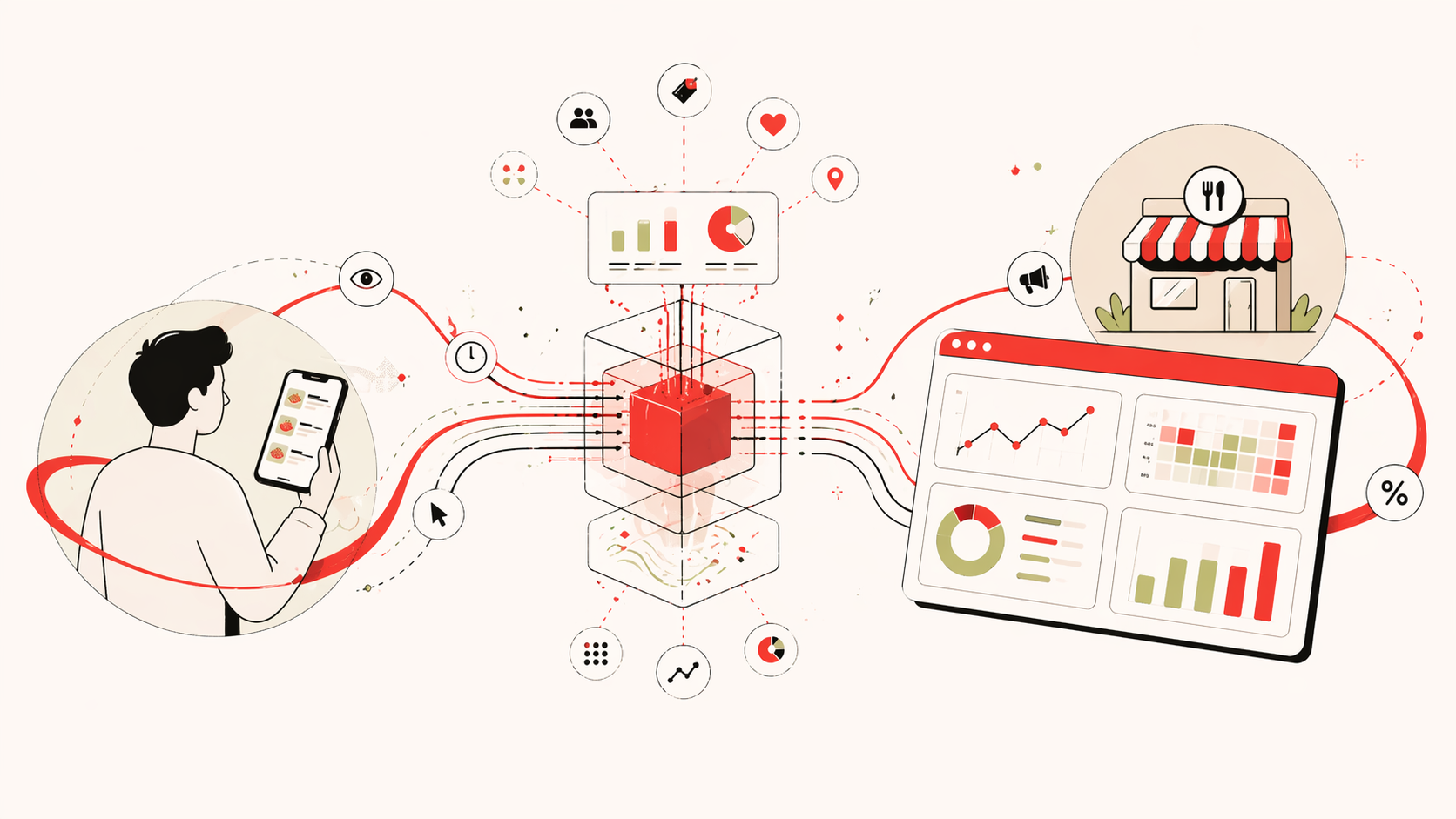
A digital menu can move beyond simply displaying content and become an interactive layer. User behavior can be tracked, understood, and processed into meaningful data without relying on identity.
At this point, the need for a shared system emerges. A structure that connects experiences across different venues, builds continuity on the user side, and produces measurable data on the business side.
Such a system:
- Starts to understand user behavior across different venues
- Gives businesses the ability to express their products and content more clearly
- Makes campaigns adaptable based on user behavior
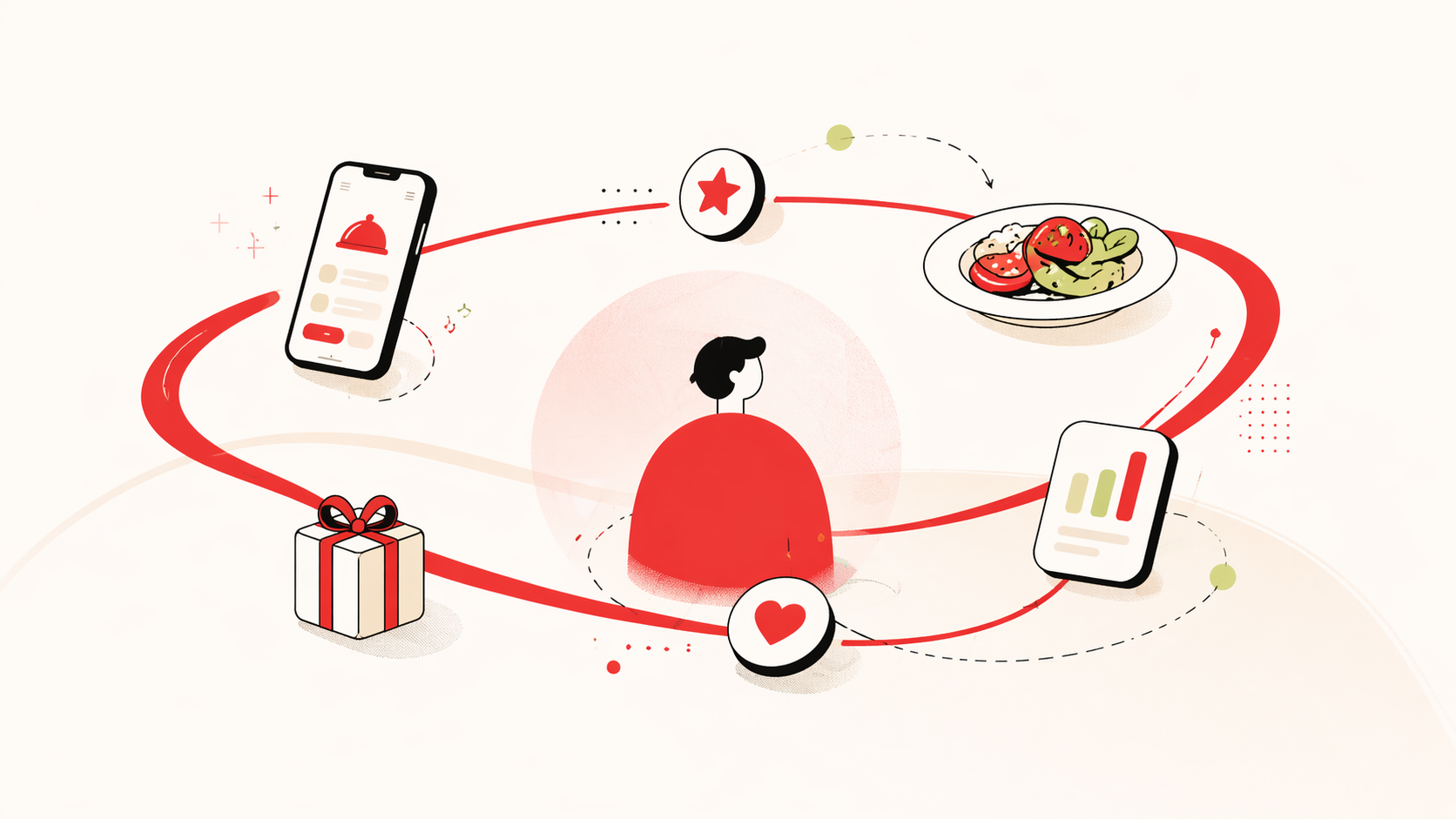
- Extends loyalty beyond a single venue and creates continuity
Over time, the data generated by this system gains broader meaning. User segments, behavior patterns, and product performance become more visible. This enables better decision-making for both businesses and users.
For example:
- Pricing decisions for new venues can be guided by real data
- Product demand can be understood at a regional level
- Campaigns and ads can be directed to more relevant audiences
At this stage, the digital menu is no longer just an interface. It becomes a learning system.
QR was a starting point.
The real value emerges in what comes after.