FEASM: Not a Menu, a System
What it is, why it exists, how it started, and who is building it
İ. Hüseyin Özdamar · April 26, 2026
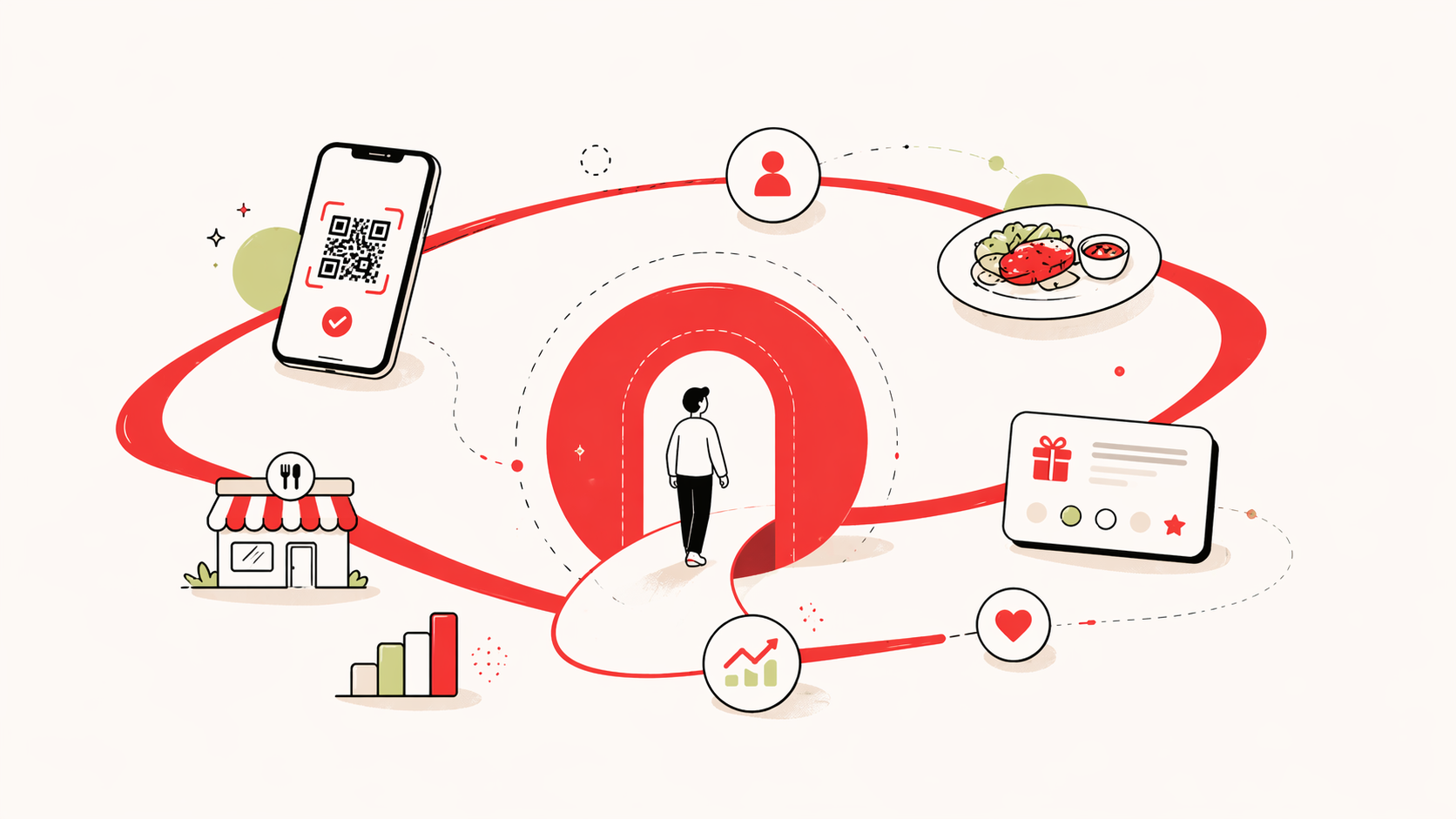
FEASM didn't start with an idea. It started with a problem that kept repeating itself. A business sticks a QR code on the table, a customer pulls out their phone, scrolls through the menu, makes a choice, and leaves. The business logs this as "we've gone digital." But what actually changed? Paper became PDF. The process stayed the same. The user came, looked, left. Content was put out there, but no one knows what's working. Everything flows through and nothing sticks.
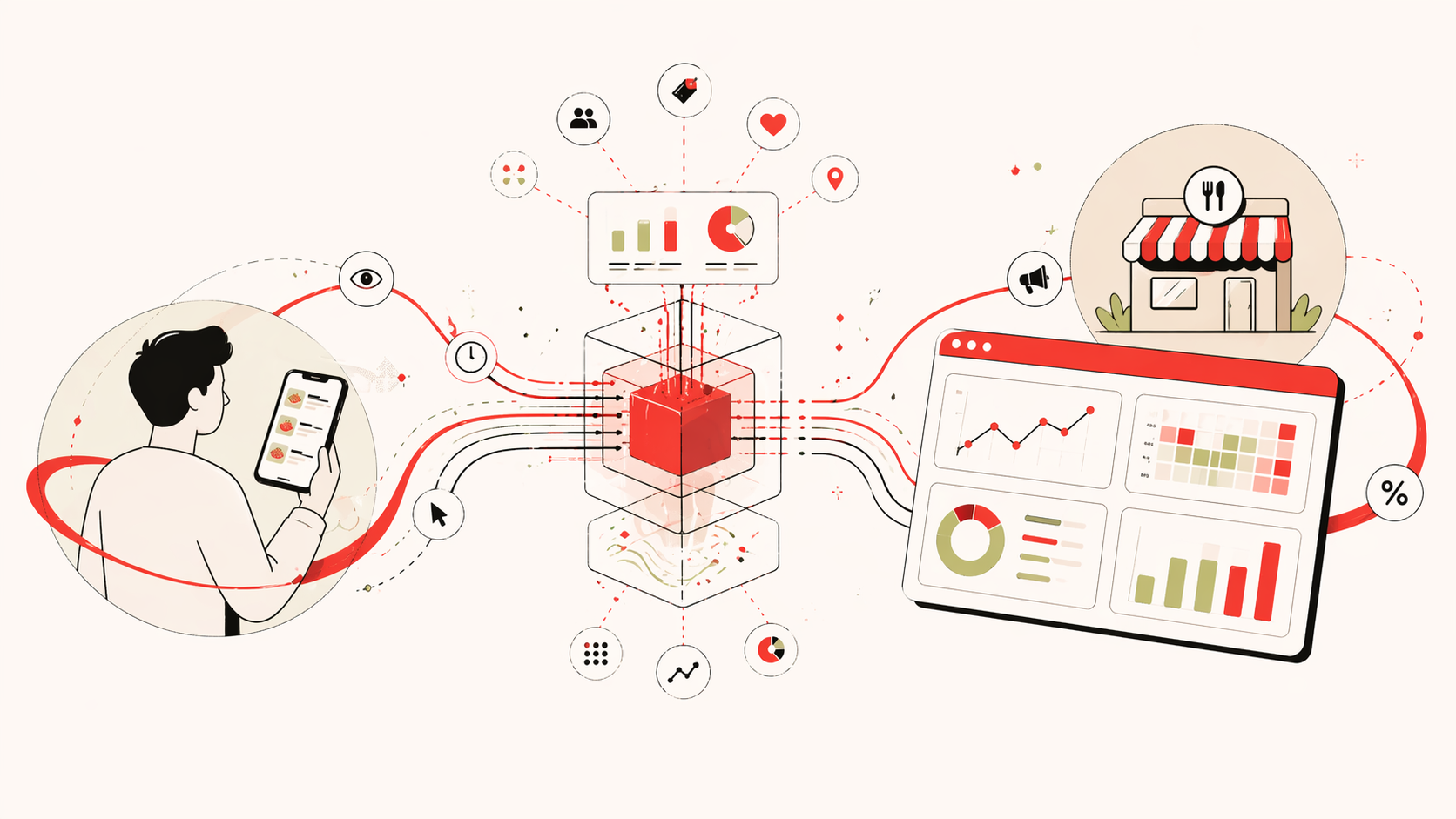
The real question is what happens inside that interaction. What did the user look at? Where did they pause? What did they decide against? Did they order the same thing again? Without answers to these questions, producing content, running campaigns, or growing in any meaningful way isn't really possible. What this platform is trying to do is make these questions answerable: a structure where user interactions can be measured, where businesses can actually use that data, and where continuity is built between both sides. Data here isn't a byproduct. It's at the center of the whole system.
We start free. Not out of naivety, but out of a straightforward observation: today's solutions are either too expensive, too complex, or far too heavy for most businesses. Small and mid-sized operators either never get into these systems at all, or if they do, they don't use them actively. So the entry barrier comes down. Setup gets simpler. Getting started gets faster. The goal isn't to make money upfront; it's to get the system working. Because a working system produces data, and without data, nothing becomes meaningful.
The data we collect isn't identity-focused, it's behavior-focused. Not who the user is, but what they do: what they look at, what they choose, where they drop off, what they come back to. As this data accumulates, patterns start to emerge. How should products be positioned? How do different user groups behave? Are campaigns actually working? What's being preferred in certain areas? These questions matter not just for existing venues, but for anyone about to open one.
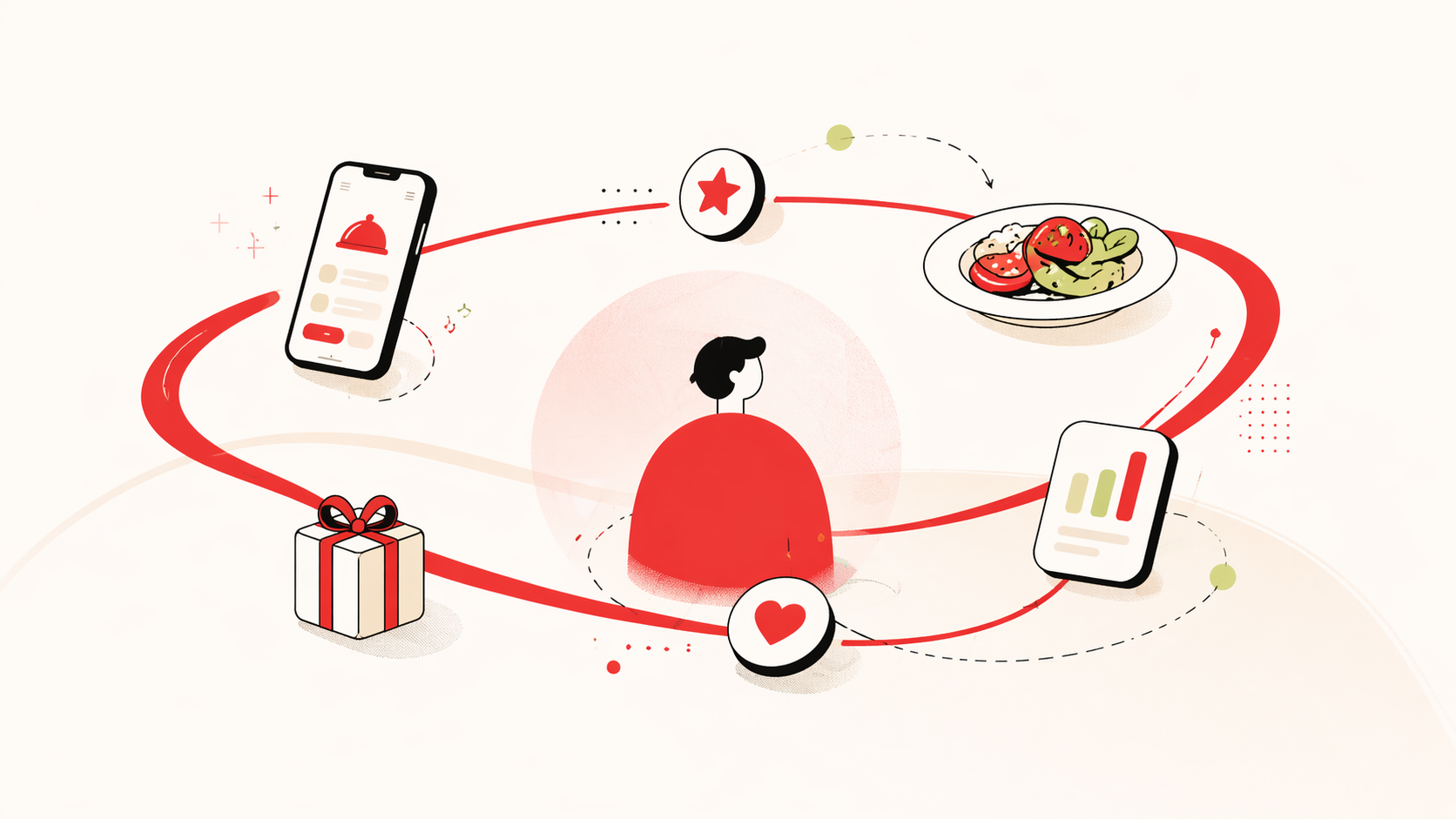
On the user side, everything looks simple. But every tap, every scroll, every selection quietly generates data. On the business side, content isn't just displayed; it's organized, tested, and measured. Campaigns can be built and adjusted, and results are visible in real time. The flow between these two sides gradually becomes self-sustaining. User groups become clearer. Product performance becomes visible. The system stops just running and starts learning.
We're a small team from different disciplines. Our designer kept seeing experiences that stayed at the surface. Our business side kept noticing that users were never really recognized. Our product side lived through how blind decision-making gets without data. This project didn't come from a single eureka moment; it came from running into the same problem in different places and different contexts, until those threads finally met. Our approach shaped itself accordingly: build fast, test with real users, scale what works.
The near-term goal is a system that works. The mid-term goal is to start genuinely understanding behavior. The long-term goal is to become something that can produce foresight, not just reports. This process is planned, but not certain. There's a roadmap, but no guarantees. We think of this as an experiment; it will end at some point. Whatever the outcome, the core ambition stays the same: to take a real problem, build a working system around it, and put it to the test.
From the outside, this might look like a product. But what we're really building is a transition. From static to fluid. From interaction without memory to a system that measures. From decisions based on gut feeling to decisions grounded in data. And that's the most important distinction: this isn't just an idea being described. It's a system being built and tested.