Understanding the Physical Experience
Making sense of data and pushing it forward with AI
İ. Hüseyin Özdamar · April 29, 2026
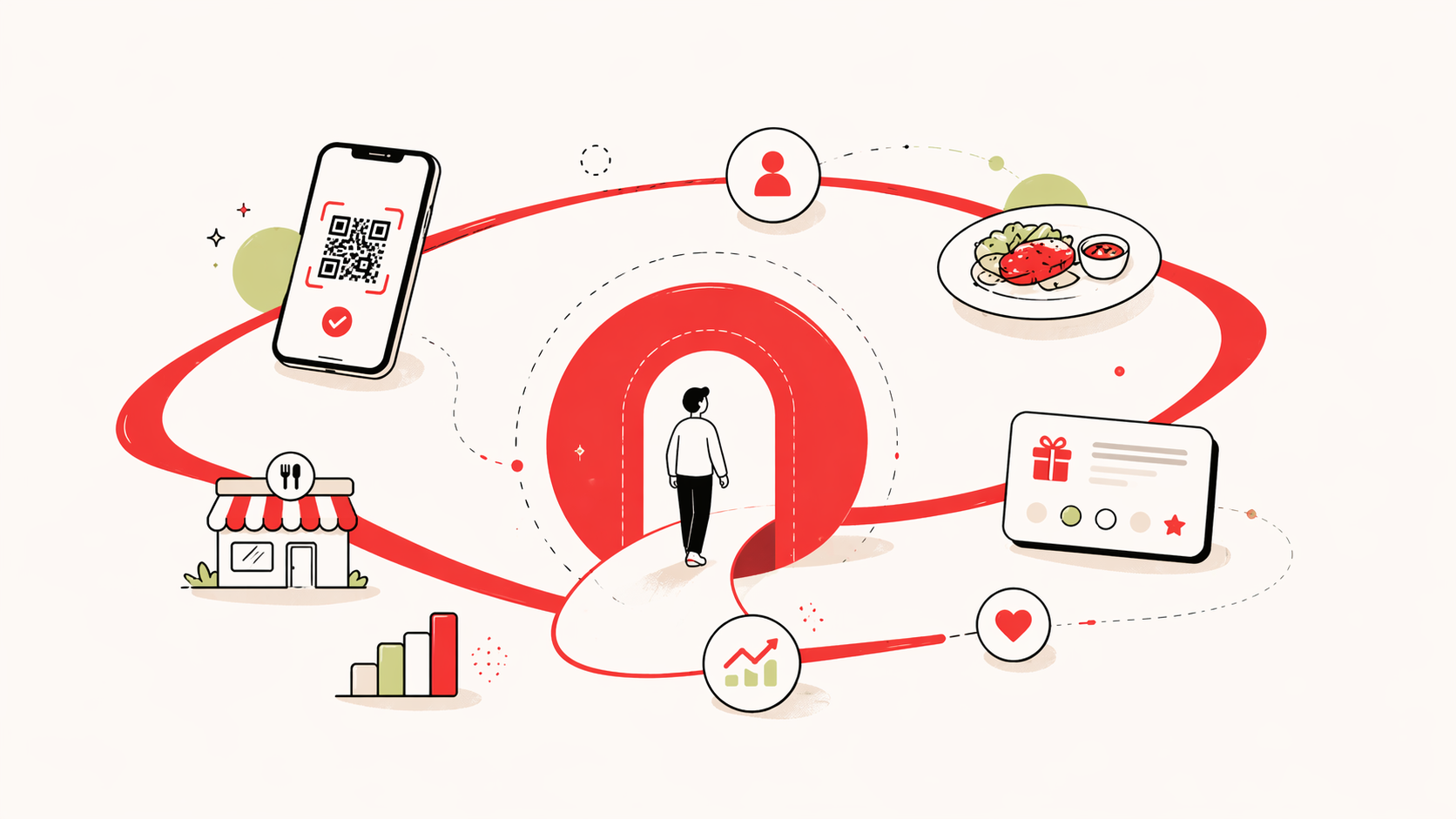
The dining experience is a physical flow. Entering a venue, sitting down, looking at the menu, deciding, ordering, consuming, and leaving. Most of this flow has never been measured. What was discussed, what was considered, what was looked at, why something was abandoned remained unknown. Only the outcome was visible: an order was placed or not.
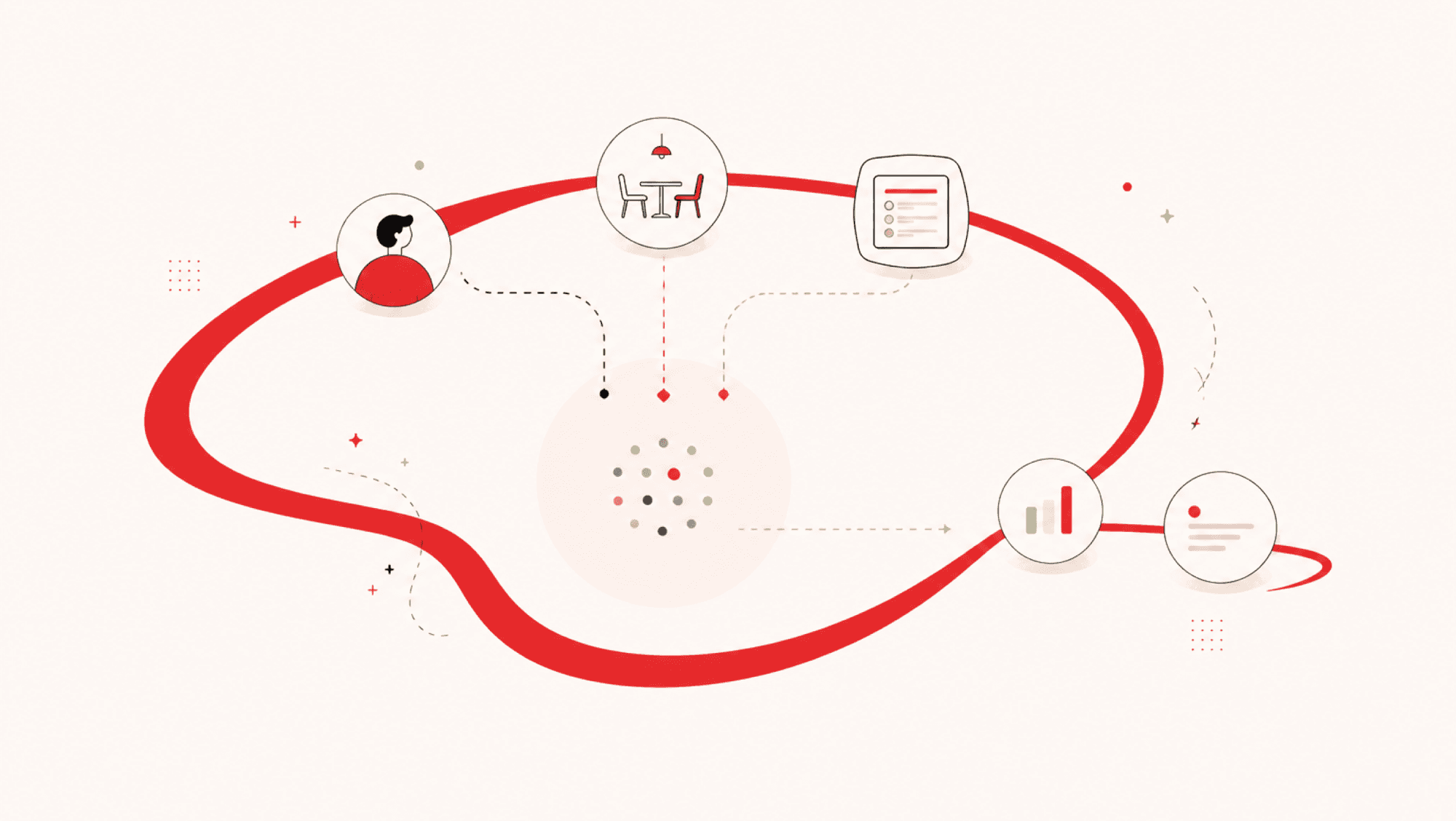
FEASM aims to bring this entire flow into a digital layer. The goal is not to change the experience, but to make it visible. Interactions that begin the moment a user enters the menu are treated as parts of the decision process. What the user looks at, where they pause, what they compare, and how they decide become data.
On its own, this data is not meaningful. Value emerges from repeated behavior. When the same flow is repeated across hundreds of users, patterns begin to form. These patterns reveal product performance, price perception, decision thresholds, and preference structures. A process that is difficult to observe physically becomes readable in digital form.
At this point, the second layer comes into play: processing the data. The collected raw data is categorized, grouped, and placed into context. Questions such as which product is viewed more under certain conditions, at what price range decisions accelerate, and which campaigns resonate with which user types become answerable. This creates a foundation that translates directly into action for businesses.
The next step is interpretation. Not just seeing what happened, but understanding why it happened. This is where AI comes in. A system trained on behavioral data begins to generate recommendations that directly address the needs of both users and businesses.
On the user side, this means the system understands what you are looking at. It recognizes patterns from users with similar preferences and can suggest options accordingly. The menu is no longer a static list, but a guiding structure.
On the business side, the system works differently. Data such as which products attract attention but are not chosen, which campaigns generate interest but not conversion, and where users drop off becomes actionable insight. Decisions around pricing, content, and campaigns become clearer.
This is not a traditional recommendation engine. It is a system fed by behavioral data and continuously updated.
Over time, the system moves beyond understanding the present and starts generating references for the future. For a new venue in a specific area, it becomes possible to understand how products should be positioned, which price ranges are more suitable, and how different user groups behave.
At this stage, data is no longer just a tool to explain the past. It becomes a layer that guides decisions.
FEASM builds this process as an experiment. It brings a hard-to-track physical experience into a digital layer, learns how to collect data, and then aims to understand and use it. AI is not the final step here, but a natural continuation of the process.
The goal is simple: to better understand the user, enable better decisions for businesses, and build a system that continuously learns between the two.
The physical experience was always there. Now it becomes readable.