From V0 to V2: Roadmap or Assumption?
Launch, communication, bottlenecks, and what we learned
İ. Hüseyin Özdamar · May 5, 2026
Reaching V0 was a milestone, but it quickly became clear that this was not the hard part. The real challenge was not launching, but being seen. A working product means nothing if no one knows it exists. This shifted the focus from building to communication. We started speaking directly with restaurants, pubs, and businesses. Going door to door, explaining, not getting a response, and explaining again. Every conversation led to the same question: what does this do for me? And most of the time, the answer was not as short or as clear as they expected.
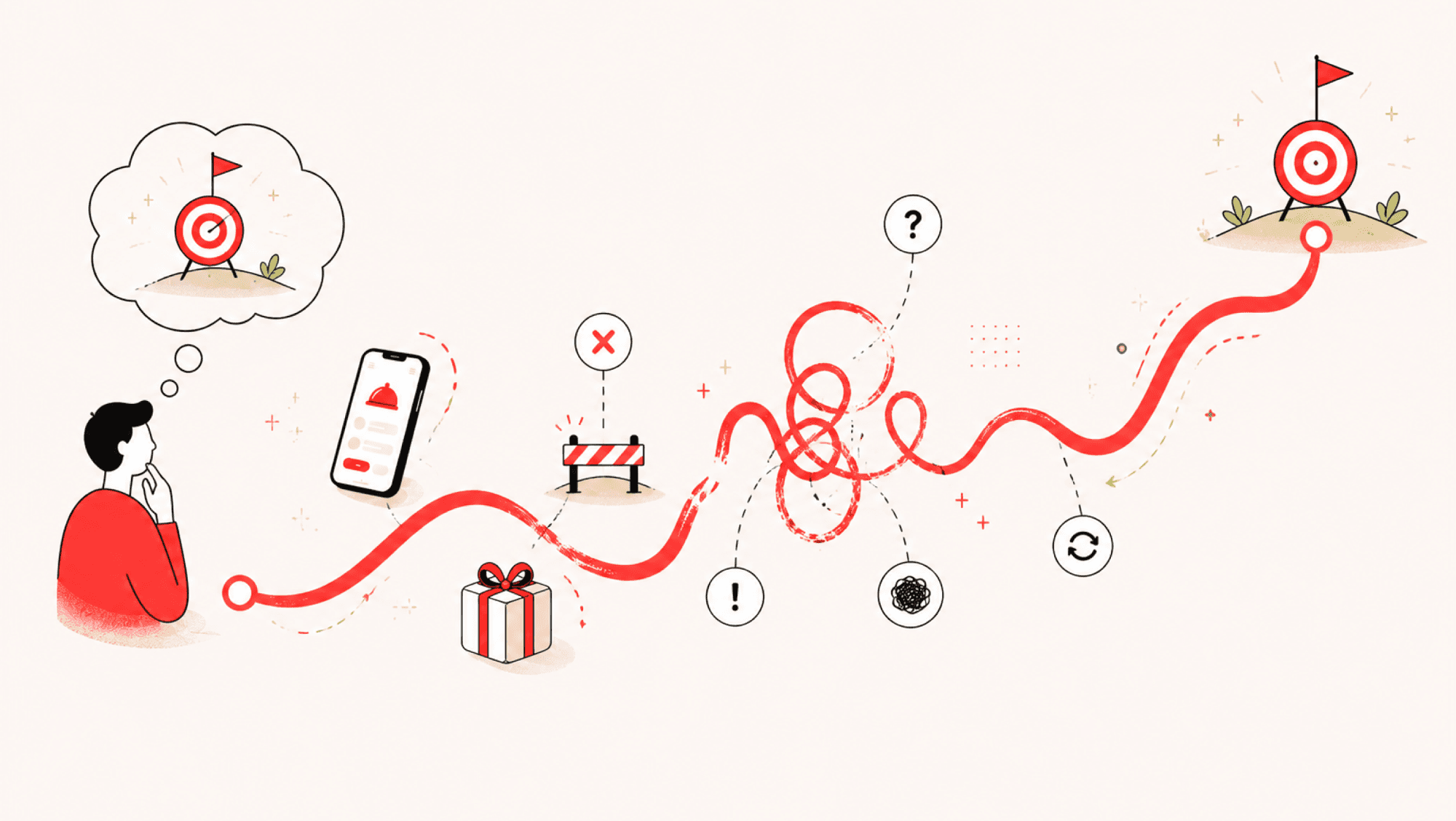
The initial roadmap was realistic. We moved with a minimal approach, so there was no technical disappointment. The system worked, flows were in place, and V0 was a real, live product. But expectations did not evolve in the same way. We expected faster adoption and earlier interest. When that did not happen, it became clear that having a working product is not enough on its own. There was a gap between what we imagined and what actually happened, and that gap made it harder to maintain momentum.
When V0 went live in April, the focus naturally shifted to acquiring users. We started reaching out to businesses, trying to convince them to work with us. But two things surfaced at the same time. The first was a communication problem. What we were trying to explain was not a simple tool, but a system that creates value over time. This made it difficult to establish a shared understanding. The second was a technical reality. Every new business and every new user brought us closer to the limits of our infrastructure.
The system was simple. A single VPS setup. It was enough in the beginning, but as things started to grow, the question changed. Would this structure still hold when dozens of businesses and hundreds of users come in? At this point, the problem was no longer just acquiring users. Scaling became central. Bringing users in is one part, sustaining them inside the system is another. Without that, growth becomes a risk rather than an advantage.
This is why the transition from V0 to V1 clarified two main priorities. On one side, communication. On the other, infrastructure. These are not independent. Good communication brings users, but without a stable system, it breaks. A strong system without communication brings no users. Both need to be solved together.
The most important shift came when we started rethinking V2. Instead of pushing forward with the original plan, we grounded it in what actually happened between V0 and V1. Where did we struggle, where did we get blocked, what did not work as expected. We mapped these clearly and then revisited the planned features. Some were removed, some simplified, some completely reworked. Because what works on paper is not always what works in reality.
At this point, FEASM is not only learning from user behavior. It is also learning from its own process. Every attempt, every feedback loop, every issue makes the system clearer. The process is not linear. There is no fixed path from start to finish. It is reactive, adaptive, and constantly adjusted.
The initial vision was faster, bigger, more fluid. What we have now is slower, but more grounded. More measurable and more controlled. The difference is not a step back. It is a correction toward reality.
V0 established the ground. V1 revealed its limits. V2 will be built on top of those limits. The focus is no longer what we want to build, but what we have proven to work.